Walking & Hiking
Trails Along the Edge
The best walking & hiking in Eyre Peninsula
Walk the granite-cliffed coastline of Whalers Way, the dunes and bays of Coffin Bay National Park, or the rugged headlands of Lincoln National Park. Short clifftop strolls and full-day coastal treks reward you with sea-lion colonies, wildflowers and endless ocean horizons.
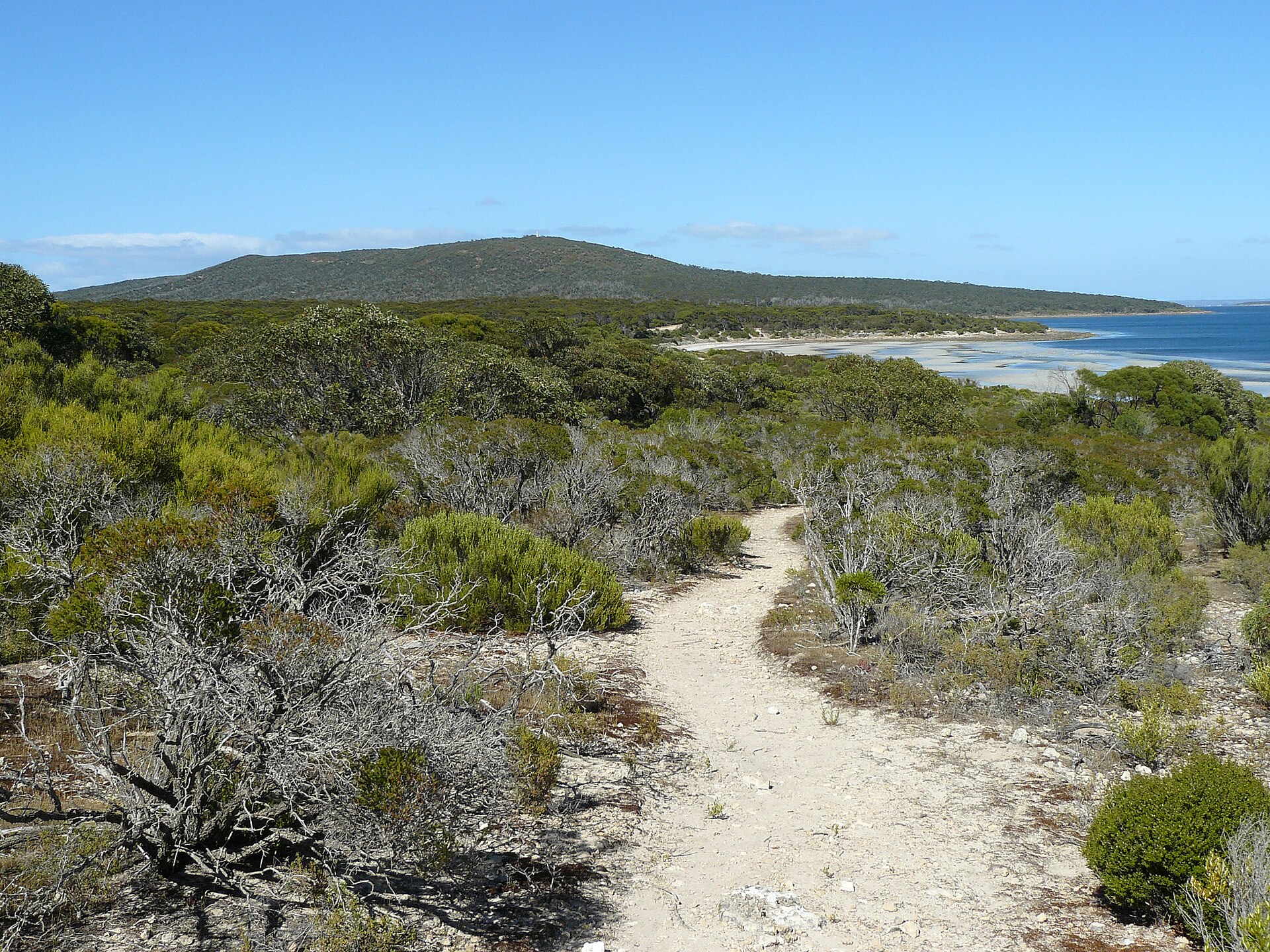
Walking the Eyre Peninsula means trading crowds for clifftops, granite domes and empty beaches. The trails here run from short, family-friendly foreshore strolls to rugged coastal hikes inside the national parks, almost always with the ocean or a sweeping inland horizon for company.
In the south, Lincoln National Park and Coffin Bay lace together lookouts, headlands and dune walks, with the climb to Stamford Hill rewarding effort with panoramic coastal views. Inland, the Gawler Ranges open up ancient volcanic country, waterfalls and the towering Organ Pipes, while granite monoliths like Mount Wudinna and Pildappa Rock offer easy scrambles to big views.
Many walks double as wildlife outings - you'll pass nesting ospreys, grazing emus and wildflowers in spring. Carry water, sun protection and a map, as remote trails have no facilities and patchy phone signal. Autumn through spring brings the most comfortable walking weather, with wildflowers peaking after winter rains.
Browse walking & hiking by area
41 places
Point Avoid
A dramatic clifftop lookout in Coffin Bay National Park with views over Golden Island, surf-pounded reefs and frequent whale sightings in season.
Point Labatt Sea Lion Colony
Australia's Largest Mainland Sea Lion Colony
A clifftop lookout above a permanent colony of Australian sea lions - the largest mainland breeding colony of this endangered species.
Polda Rock
A granite outcrop and historic catchment reserve near Wudinna, with a short walk, spring wildflowers and a heritage rock-water dam.
Polda Rock
The rock that watered a town
A granite outcrop near Wudinna that served as the town's original water catchment - the hand-built stone channels and reservoir still wrap around its base.
Searcy Bay
A scenic bay near Sceale Bay framed by rugged cliffs and offshore islands, with sweeping coastal views and quiet beaches.
Stamford Hill Lookout
A summit walk in Lincoln National Park to a Flinders monument, with 360-degree views over Boston Bay and the islands.
Talia Caves
The Woolshed & the Tub
Two dramatic coastal formations near Elliston - a vast granite cave called The Woolshed and a deep cliff-edge sinkhole called The Tub.
Tcharkuldu Rock
A cluster of weathered granite domes and balancing boulders near Wudinna, with a short walking trail and big inland views.
The Tub at Talia
A near-perfect circular sinkhole eroded into the cliff top at Talia, where the ocean churns far below through a rock window.
Ucontitchie Hill
A lone granite dome of world-class geology
A solitary granite inselberg 32 km south of Wudinna, internationally significant for its flared slopes, honeycomb tafoni and wave-like rock structures.
Venus Bay Conservation Park
A chain of islands and peninsulas sheltering Venus Bay, a refuge for sea lions, ospreys and seabirds.
Venus Bay Foreshore & Lookouts
Pelicans, Cliffs & Quiet Water
A tiny fishing settlement on a sheltered inlet, with a pelican-filled foreshore and dramatic cliff lookouts at the Needle Eye and South Head.
Westall Way Loop
A self-drive scenic loop near Streaky Bay taking in Whistling Rocks, the Granites surf beach and sculpted coastal cliffs.
Whalers Way
Granite Cliffs at the End of the Earth
A privately owned stretch of spectacular, untamed coastline at the southern tip of the Eyre Peninsula, accessed by permit.
Whyalla Conservation Park
A pocket of semi-arid bushland with a trail up Wild Dog Hill through mallee and bluebush to long views over the plains.
Woolshed Cave
A vast sea cave carved into the cliffs at Talia, north of Elliston, reached by a short walk and a cliff stairway.
Yangie Bay
A tranquil, sheltered bay and campground at the gateway to Coffin Bay National Park, ringed by mangroves and birdlife.
Walking & Hiking in Eyre Peninsula - frequently asked questions
What are the best walks and hikes on the Eyre Peninsula?
The signature walking is coastal, concentrated in the south around Port Lincoln. Standouts include the granite-cliffed trails of privately owned Whalers Way, the Stamford Hill loop and long-distance Investigator Trail in Lincoln National Park, and the Yangie Bay walks in Coffin Bay National Park. For an inland contrast, the Gawler Ranges National Park has the short Organ Pipes Walk through billion-year-old rock formations and the wave-like granite of nearby Pildappa Rock.
Is the Stamford Hill walk in Lincoln National Park worth doing?
Yes - it is one of Australia's recognised Great Short Walks and the most popular hike on the southern peninsula. The roughly 5.7 km loop climbs steadily to the Stamford Hill lookout and the Flinders Monument, with sweeping views over Boston Bay, Port Lincoln and the park itself. It is moderately steep but achievable for most reasonably fit walkers, and the lookout is also the high point of the longer Investigator Trail.
Do I need a permit or pay an entry fee to go walking here?
Lincoln National Park and Coffin Bay National Park charge a vehicle entry fee (around $13.90 per car, or less with concession), which you pay before entering. Whalers Way is privately owned, so you buy a separate access permit per vehicle that also includes a night of camping on the property. The Gawler Ranges, Pildappa Rock and most coastal foreshore strolls around towns like Elliston are free to access.
Can I bring my dog walking on the Eyre Peninsula trails?
Not into the major national parks - dogs are prohibited in both Lincoln National Park and Coffin Bay National Park, with only assistance dogs permitted. You can still walk a dog around the townships and many foreshore and beach areas, including in Coffin Bay town itself, so it is worth checking dog-friendly beaches in the area if you are travelling with a pet.
When is the best time of year for walking and hiking on the Eyre Peninsula?
Autumn (March to May) and spring (September to November) are ideal, with mild days well suited to clifftop and coastal treks. Spring also brings wildflowers to the Gawler Ranges and coastal heathlands, while the cooler months from June onwards add southern right whales offshore. Summer is best avoided for longer or inland walks, as there is little shade and the heat can be intense, especially in the Gawler Ranges.