
Heritage & History
Stories of the Coast
The best heritage & history in Eyre Peninsula
Matthew Flinders charted this coast in 1802, naming its capes and bays for the crew he lost at Memory Cove. Whaling stations, historic jetties, grain ports and the silos-turned-galleries of the public art trail trace the layered history of the far west.
Read our guide to heritage & history ↓Browse heritage & history by area
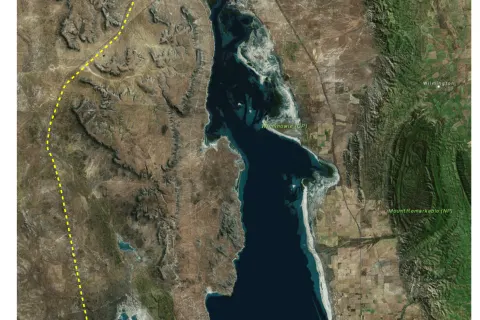
Map shows the 14 places on this page.
Pildappa Rock
View →A giant pink granite inselberg near Minnipa with a perfect "wave" formation, often called a friendlier rival to Wave Rock.
Point Lowly Lighthouse
View →A heritage lighthouse and keeper's cottages on a narrow spit east of Whyalla, gateway to the famous cuttlefish snorkelling.
Polda Rock
View →The rock that watered a town
A granite outcrop near Wudinna that served as the town's original water catchment - the hand-built stone channels and reservoir still wrap around its base.
Port Neill Jetty & Foreshore
View →A tidy gulf-side town between Tumby Bay and Arno Bay, with a historic jetty and a calm swimming beach.
St Matthew's Anglican Church (Poonindie)
View →A stone colonial church north of Port Lincoln, the surviving heart of the 19th-century Poonindie Mission.
Stamford Hill Lookout
View →A summit walk in Lincoln National Park to a Flinders monument, with 360-degree views over Boston Bay and the islands.
Streaky Bay Powerhouse Museum
View →A volunteer-run museum in Streaky Bay built around the town's original diesel powerhouse and restored engines.
Tcharkuldu Rock
View →A cluster of weathered granite domes and balancing boulders near Wudinna, with a short walking trail and big inland views.
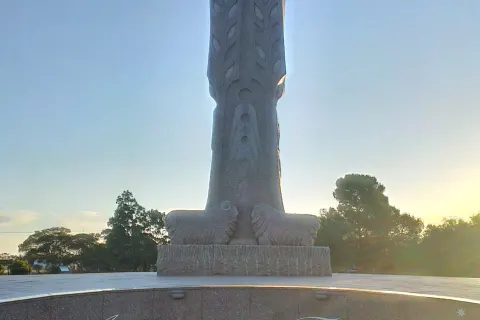
The Australian Farmer
View →An eight-metre farmer carved from local granite
Wudinna's monumental granite sculpture - eight metres and around seventy tonnes of local stone, carved over two years by Marijan Bekic as a tribute to the region's farming pioneers.
Tumby Bay Jetty & Foreshore
View →A Long White Jetty & Calm Water
Tumby Bay's historic jetty and long white-sand foreshore, offering safe swimming, good fishing and views to the Sir Joseph Banks islands.
Tumby Bay Murals
View →A Seaside Town Turned Gallery
An internationally significant collection of large-scale murals painted across Tumby Bay as part of the Colour Tumby street-art festival.
Venus Bay Jetty
View →A long jetty over the sheltered inlet at Venus Bay, a prime spot for whiting and squid and for watching dolphins in the bay.
Whalers Way
View →Granite Cliffs at the End of the Earth
A privately owned stretch of spectacular, untamed coastline at the southern tip of the Eyre Peninsula, accessed by permit.
Whyalla Maritime Museum
View →Home to HMAS Whyalla, a WWII corvette dry-docked on land, telling the story of the town's shipbuilding and steel heritage.
About heritage & history in Eyre Peninsula
The Eyre Peninsula's story runs deep - from tens of thousands of years of Barngarla, Wirangu, Nauo and Kokatha presence to maritime explorers, lighthouse keepers and the fishing and farming families who shaped its coastal towns. You can read that history in the jetties, lighthouses and grain ports that still line the gulf.
In Port Lincoln, Matthew Flinders named the bays and headlands during his 1802 survey, and Whyalla preserves its shipbuilding past at the maritime museum, where the corvette HMAS Whyalla sits in dry dock. Historic lighthouses at Cape Donington and Point Lowly, the heritage jetties of Tumby Bay and Cowell, and the silo and street art that now brighten the wheat towns all add layers to the journey.
Many heritage sites sit within easy reach of the beaches and walking trails, so a coastal drive easily folds in museums, murals and lookouts. Most are free or low-cost and open year-round, making them an easy, all-weather addition to any Eyre Peninsula itinerary.
Heritage & History in Eyre Peninsula - frequently asked questions
What is the Eyre Peninsula known for when it comes to heritage and history?
The far west is best known for its maritime past, beginning with Matthew Flinders charting the coast in 1802 and naming Memory Cove and Cape Catastrophe after eight crew lost in a boating tragedy near Cape Catastrophe. You can also trace 19th century whaling at Whalers Way, historic lighthouses, and the grain ports and timber jetties that line both the Spencer Gulf and the open Southern Ocean coast. Underpinning it all is the deep presence of the Barngarla, Nauo, Wirangu and Kokatha peoples, who have lived here for tens of thousands of years.
Where can I see the Eyre Peninsula's lighthouses and maritime heritage?
Two standouts are Point Lowly Lighthouse near Whyalla, built in 1883 to guide ships through Spencer Gulf and the oldest European structure in the Whyalla area, and Cape Donington Lighthouse east of Port Lincoln, dating from 1905. For hands-on history, the Axel Stenross Maritime Museum in Port Lincoln tells the story of Finnish boat builders from the windjammer era and includes an operating slipway and historic vessels.
What is the silo art and street art trail on the Eyre Peninsula?
Tumby Bay is the region's street art hub, with its grain silos painted in 2018 by Argentine artist Martin Ron, depicting two boys leaping from the Tumby Bay jetty. The town also hosts the Colour Tumby festival, held every two years since 2018, which has filled the streets with around 20 large-scale murals you can explore on foot. The silos form part of the broader Australian Silo Art Trail that links painted grain towns across regional South Australia.
Do I need to book heritage sites, and are they family or dog friendly?
It varies by site, so it pays to check ahead. The Axel Stenross Maritime Museum in Port Lincoln, for example, opens only on selected days each week, while the Tumby Bay silos, lighthouses and street art murals are outdoor and free to view at any time. Mikkira Station, settled in 1842 as one of the first properties on lower Eyre Peninsula, charges an entry fee and is a popular family picnic spot where you can see wild koalas among the old stone homestead ruins.
How can I learn about the Aboriginal history of the Eyre Peninsula?
The peninsula is the traditional country of the Nauo, Barngarla, Wirangu and Kokatha peoples, whose presence here spans tens of thousands of years. A significant site is the Elliston Reconciliation Monument on the Elliston Coastal Trail, which acknowledges Aboriginal people killed at Waterloo Bay in the 1840s. Local visitor centres in towns like Port Lincoln and Ceduna can point you to current cultural tours and interpretive sites, as availability changes from season to season.