By Editorial Team · · 6 min read
Penong has always lived or died by its windmills. Now the town has gathered twenty of them - including the biggest in Australia - into one gloriously creaky museum.
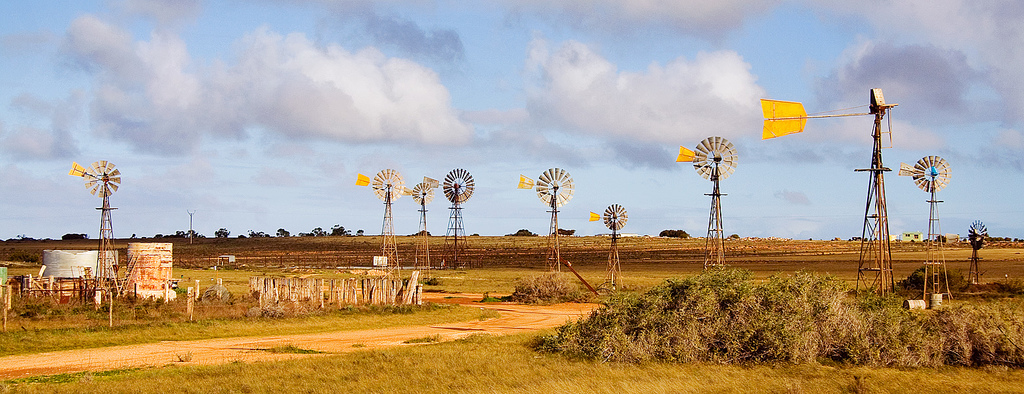
Drive the Eyre Highway far enough west and the towns thin out until each one becomes an event. Penong, 75 km beyond Ceduna, announces itself the same way it always has: with windmills. They stand over the town and the surrounding saltbush plains like a flock of patient metal birds, and they are the reason anyone could live here at all.
A town built on wind and water
There is no reliable surface water at Penong. From the 1890s, when the town took shape as a service centre for the far-west sheep runs and later the wheat farms, every drop for households and stock had to be hauled up from the basin below - and the only engine anyone could afford was the wind. At its peak the town and its surrounds ran so many mills that travellers called Penong 'the town of a hundred windmills'. Locals will cheerfully admit the number was always more poetry than census, but the poetry stuck.
When mains water finally arrived, the mills did not disappear. They simply kept spinning, semi-retired, too useful and too loved to pull down.
The museum that built itself
In 2016 the community decided to make the legend official, gathering donated windmills from properties as far away as Marla, the Riverland and Alice Springs, restoring them on weekends, and standing them up together beside the highway as the Penong Windmill Museum. There are around twenty now, from dainty domestic mills to industrial monsters, and the collection is free to wander at any hour - an honesty-box museum in the best country tradition.
The centrepiece arrived the same year, and he has a name: Bruce.
Big Bruce
Bruce is a 35-foot Comet windmill - one of only fifteen ever built, and the largest windmill in Australia. Built in 1932, he spent his working life with the Commonwealth Railways, pumping water at McKinnon Dam for the steam locomotives that crossed the desert, before moving to Coondambo Station in 1977. In his prime he could lift water from 150 metres down and pump more than a million litres a day. High winds finally wrecked his fan in 2003, and he lay in pieces until Penong's volunteers trucked him home, rebuilt him and raised his ten-metre wheel over the museum.
Stand under Bruce on a windy day - there are plenty - and the whole structure hums like a tuning fork. It is the sound of the far west's entire economic history, played on one instrument.
Worth the detour
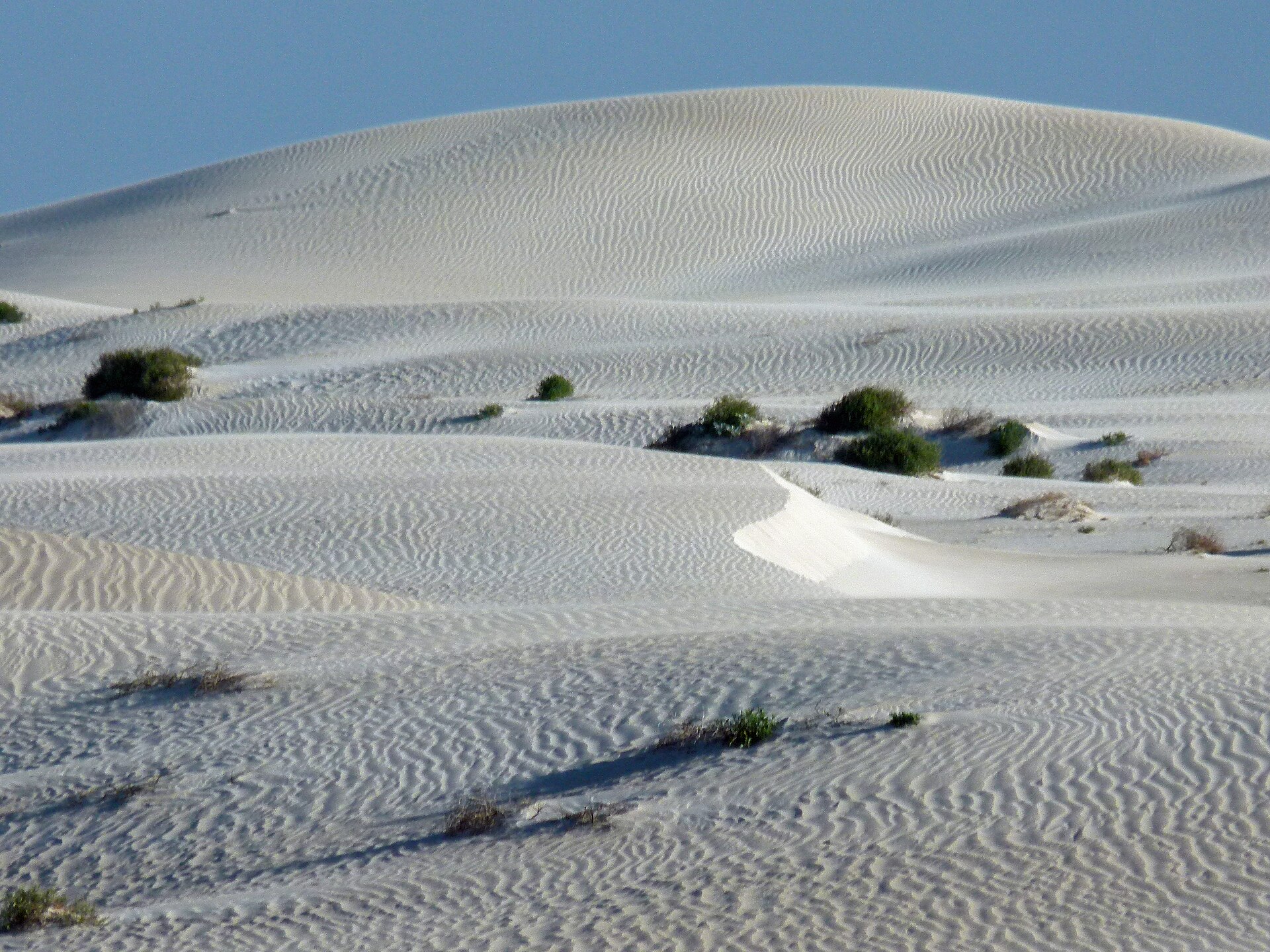
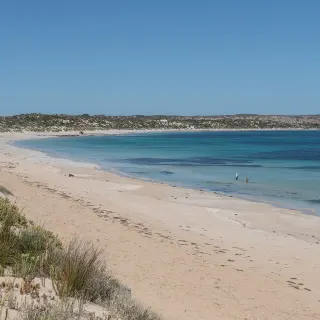
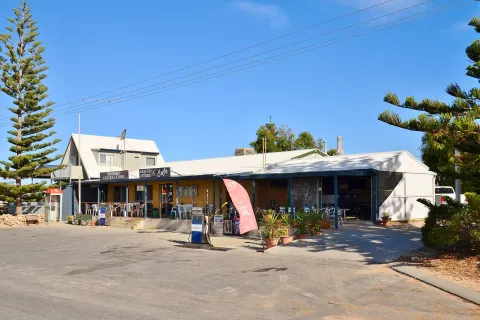
Penong rewards more than a photo stop. The general store does a famous pie, the pink salt lake on the town's edge glows at sunset, and 21 km south down a dusty road lies Cactus Beach, the most storied surf break in South Australia. Time it right and you can watch the sun set over the dunes at Point Sinclair before rolling back to the highway.
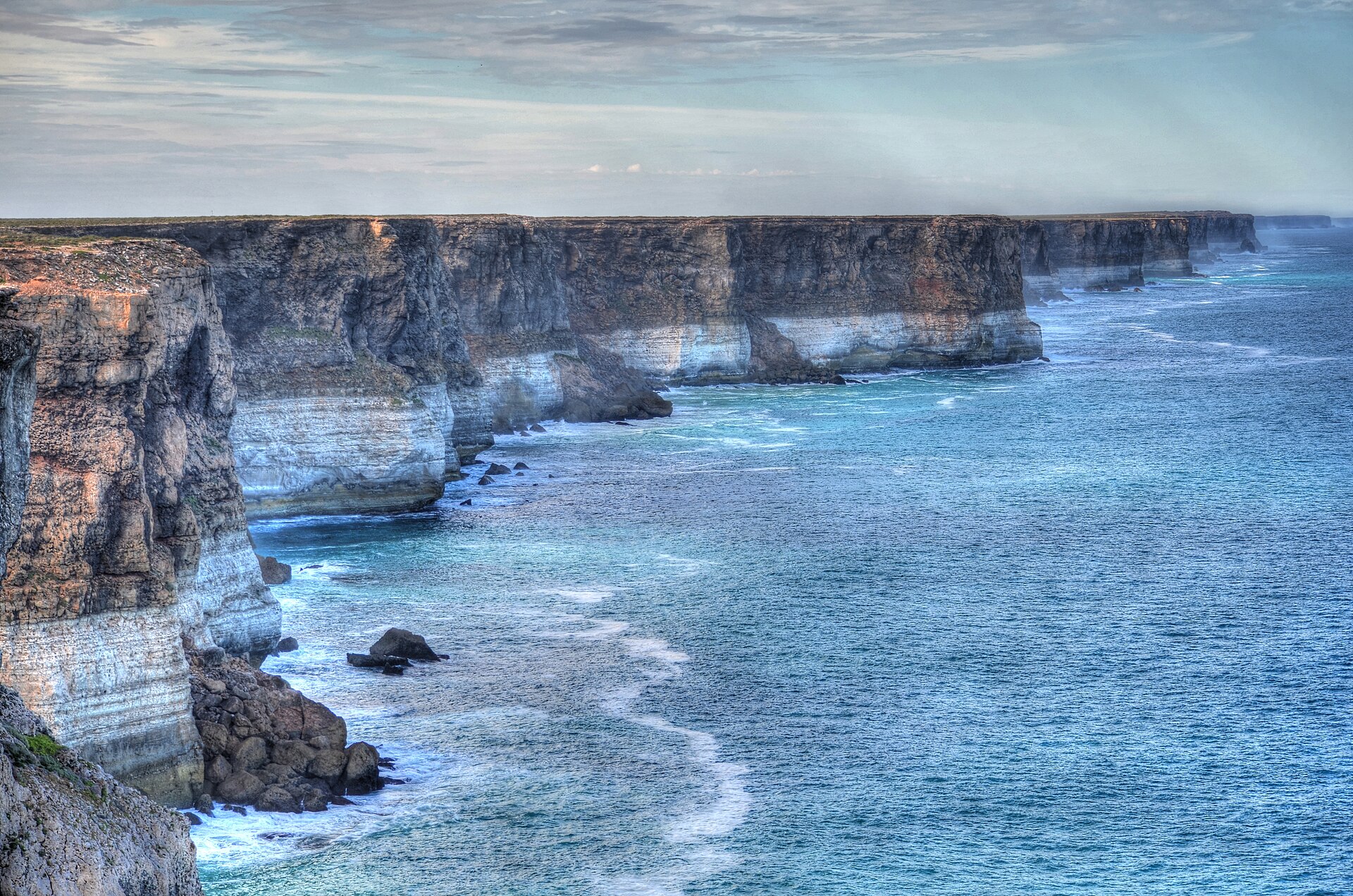
The windmills are the gateway to the far west's wider wonders - the whales of Fowlers Bay and the Head of Bight lie further west along the highway. For the full route, our story The Far West Run strings the whole coast together; Penong is its first, squeaking waypoint.