By Editorial Team · · 7 min read
Fowlers Bay has hosted Flinders, Eyre and generations of whalers. Now its oldest adversary - a vast white dune - looms over the town it keeps trying to bury.
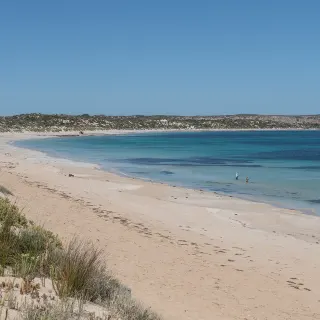
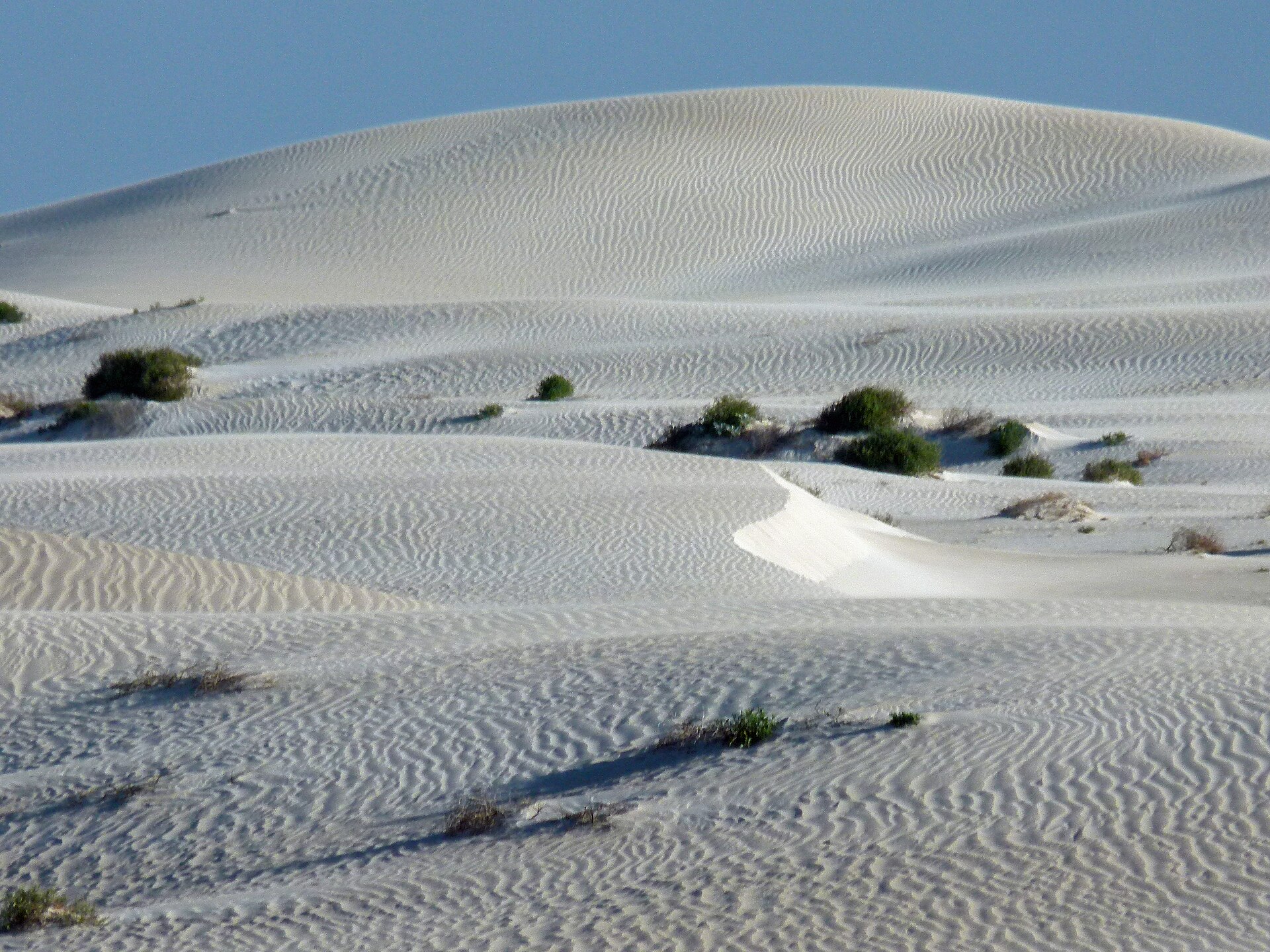
Every coastal town fights the sea. Fowlers Bay, uniquely on this coast, fights the land. Behind its single row of streets rises a wall of brilliant white sand - a dune field marching slowly up from Scotts Bay, two kilometres south - that has spent the past century trying to swallow the town. Locals rake their driveways the way other towns mow lawns. The dune does not negotiate. It is, in its way, the perfect emblem for the far west: beautiful, indifferent and very patient.
First footsteps
Few places in South Australia carry more layered history. The coastline here was charted as early as 1627 by the Dutch captain François Thijssen, and on 28 January 1802 Matthew Flinders anchored in the bay and named it for his first lieutenant, Robert Fowler - his crew going ashore in what was one of the first recorded European landings on South Australian soil. Four decades later, Edward John Eyre pitched his base camp here from November 1840, staging his doomed-then-triumphant crossings of the Nullarbor from this exact beach.
And before, during and after all of that came the whalers. American and French ships worked the bay from the late eighteenth century, and the remains of their shore camps - along with a stone lookout shelter on the point - can still be traced along the shoreline.
Port, decline, sleep
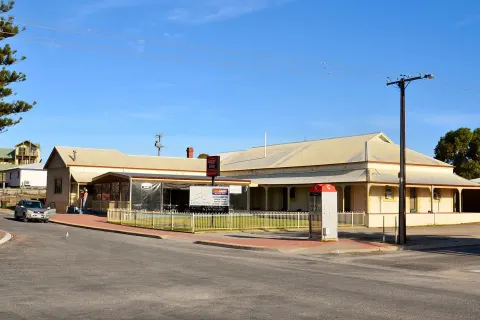
The town proper grew from the 1860s as a landing for the great sheep runs of the far west, and the long timber jetty - built in 1896 and extended three times by 1948 - loaded wool for the world. When trucks and sealed roads ended the coastal trade in the 1960s, Fowlers Bay simply went to sleep: the kind of decline that, decades later, looks like preservation. What remains is a perfect miniature of an old working port, pickled in salt air.
The whales came back
The bitter irony of Fowlers Bay's whaling past is that the whales outlasted the industry - and have now become the town's living. Southern right whales return to the bay's sheltered waters every winter between May and October, mothers and calves drifting sometimes within sight of the jetty. Seasonal boat tours run from the jetty between July and October when conditions and whale numbers allow, and on a still morning you can stand at the end of the planks and hear the whales breathing.
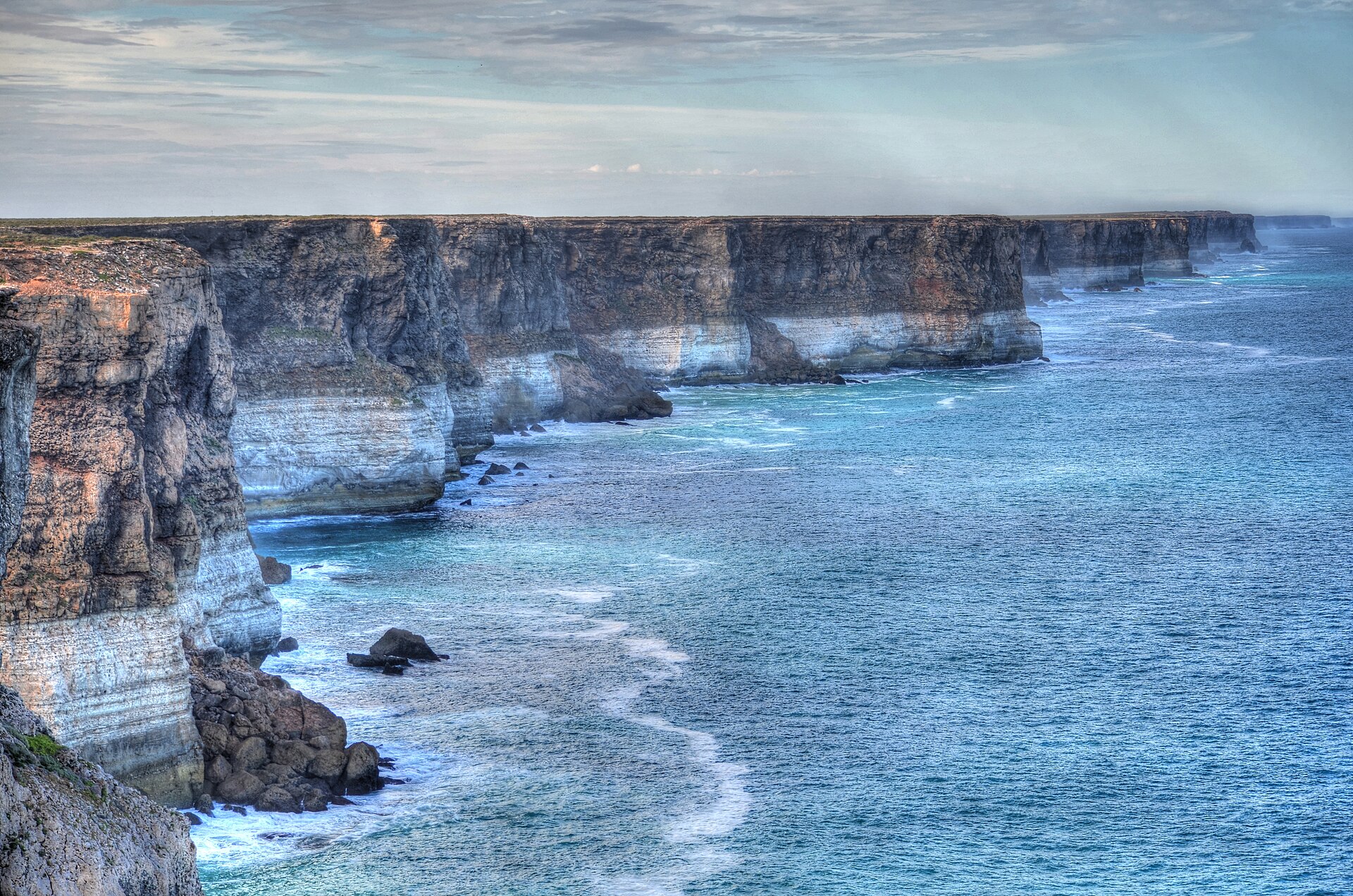
It is one of the two great whale theatres of the far west, alongside the cliff-top amphitheatre at the Head of Bight, where the Bunda Cliffs turn whale-watching into geology-watching. Our story Winter of the Whales covers the full season.
Visiting the edge
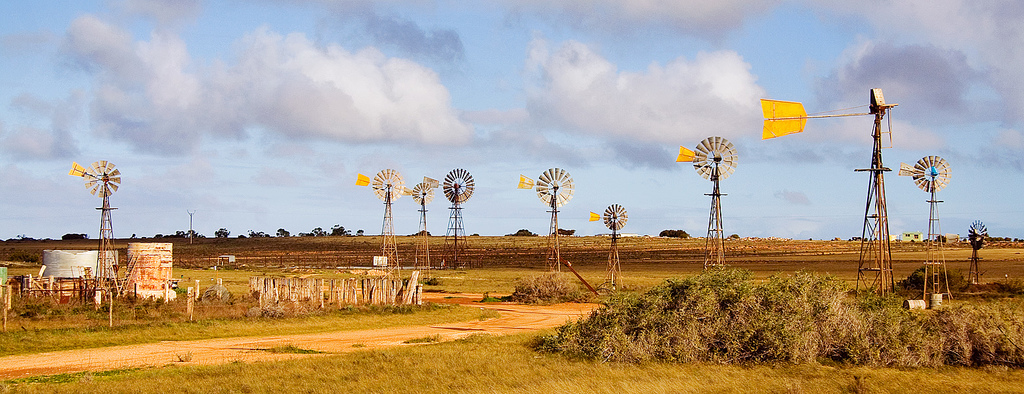
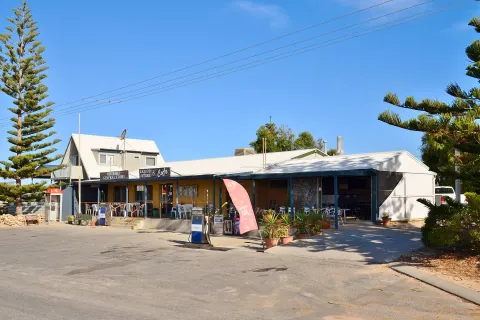
Fowlers Bay today has a caravan park, a kiosk, the jetty - salmon, whiting, squid - and the dune, which doubles as the town's grandstand. Climb it at sunset and the view sweeps from the sleeping town across the bay to a coast that looks exactly as Flinders found it. Getting here is half the pleasure: the sealed road in passes through Penong and its windmills, and the wider far west - Cactus, the Ceduna foreshore, the roadhouse rhythm of the highway - arranges itself naturally around an overnight stop.
Bring a kite. The wind that brought the whalers, turned the windmills and built the dune is still on duty, and at Fowlers Bay it feels less like weather than like the town's oldest resident.